
How Much Mobile Data Do You Need When Traveling Abroad? eSIM Data Plan Guide
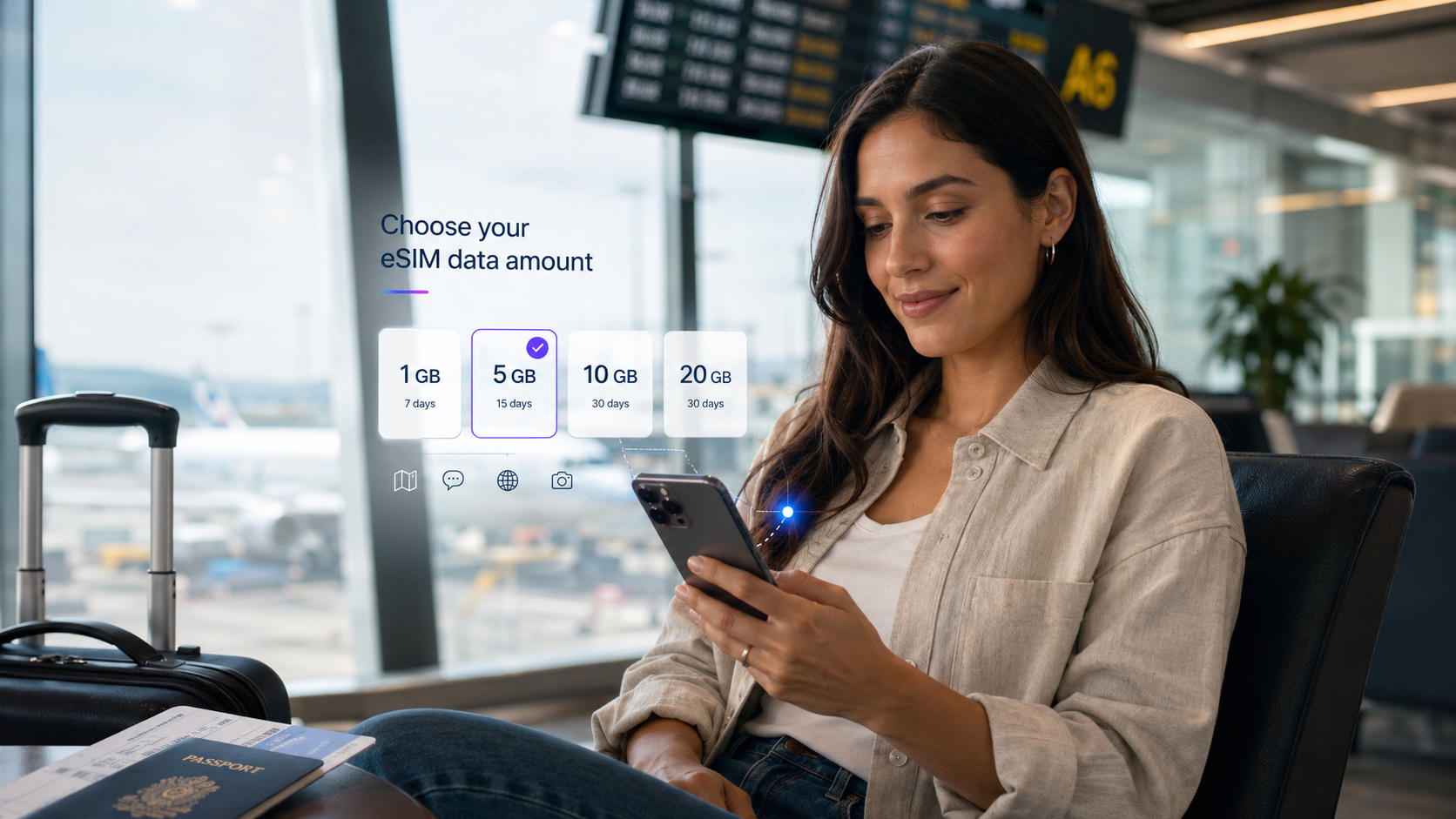
Traveler choosing a mobile data plan on a smartphone before traveling abroad
How Much Mobile Data Do You Need When Traveling Abroad?
Choosing the right eSIM data plan can feel confusing before a trip. You may wonder if 1GB is enough for a weekend, whether a 5GB eSIM plan can cover a week abroad, or if you need 10GB or more for work, maps, social media, and video calls.
The answer depends on how you use your phone. A traveler who only checks maps and messages will need much less mobile data abroad than a digital nomad using hotspot, cloud tools, and video meetings every day.
The good news is that you do not need to guess. By understanding your travel habits and how different apps use data, you can choose a prepaid eSIM that fits your trip, avoid paying for more data than you need, and reduce the risk of running out when you need internet while traveling.
This guide explains how much travel data different travelers may need and how to choose the right duasim eSIM plan before you go.
Quick Guide: How Much Mobile Data Abroad Do You Need?
Use this as a simple starting point:
Trip type | Typical data need | Best for |
|---|---|---|
Weekend trip | 1GB–3GB | Maps, messaging, light browsing |
One-week trip | 3GB–7GB | Maps, social media, bookings, email |
Two-week vacation | 5GB–15GB | Regular travel use, photos, apps, browsing |
Business trip | 10GB–20GB | Email, maps, work apps, app-based calls |
Digital nomad trip | 20GB+ | Remote work, hotspot, video calls, uploads |
Heavy mobile user | 30GB+ | Streaming, hotspot, content creation, daily video |
These are practical estimates, not fixed rules. Your real usage depends on app settings, video quality, hotspot use, automatic backups, and how often you connect to Wi-Fi.
Why Choosing the Right eSIM Data Plan Matters
A travel eSIM helps you use mobile data abroad without changing physical SIM cards. But the plan you choose should match your real travel habits.
If you buy too little data, you may run out while using maps, transport apps, messaging, or work tools. If you buy far more than you need, you may spend more than necessary.
A good eSIM data plan should answer five questions:
- Where are you traveling?
- How many days will you be away?
- Will you use Wi-Fi often?
- Will you stream, work, or use hotspot?
- Do you need a country, regional, or global plan?
duasim offers eSIM connectivity in 200+ countries, with no physical SIM card, instant delivery, and a simple digital setup process. (duasim)
How Much Data Do Common Travel Apps Use?
Different apps use very different amounts of data. Messaging and maps are usually light. Video, hotspot, and cloud backups use much more.
Maps and navigation
Maps usually do not use as much data as many travelers expect. If you mainly use maps for walking directions, public transport, or driving navigation, your data use is usually low to moderate.
To save data, download offline maps before your trip. This is useful for city breaks, road trips, and destinations where mobile signal may not always be strong.
Messaging and email
Text-based messaging apps and email are usually light data activities. WhatsApp, iMessage, Messenger, Telegram, and email do not use much data when you are sending text only.
They use more data when you send:
- Photos
- Videos
- Voice notes
- Large email attachments
- Documents
- High-resolution media
If your trip is mostly maps, messages, email, and light browsing, a smaller prepaid eSIM may be enough.
Web browsing and travel apps
Web browsing usually uses a moderate amount of data. Travel apps such as hotel booking apps, airline apps, train apps, restaurant apps, and ride-hailing apps are usually manageable for most travelers.
However, data use increases when websites or apps load many images, videos, maps, or ads.
Social media
Social media can use data quickly because feeds often include videos, stories, reels, and high-resolution images.
Apps such as Instagram, TikTok, Facebook, YouTube Shorts, and Snapchat can use far more data than maps or messaging. If you plan to scroll often, upload videos, or post content throughout the day, choose a larger eSIM data plan.
A useful habit is to upload large videos and photo backups when you are connected to hotel or apartment Wi-Fi.
Music and podcasts
Music and podcasts use less data than video, but they can still add up during long travel days. If you listen while walking, driving, flying, or using public transport, download playlists and podcasts on Wi-Fi before you leave.
Video streaming
Video streaming is one of the fastest ways to use travel data. Watching YouTube, Netflix, TikTok, live streams, or video-heavy social feeds on mobile data can quickly reduce your allowance.
If you plan to stream often, consider a larger plan or use Wi-Fi for video.
Video calls and remote work
Video calls can use a lot of data, especially for business travelers and digital nomads. CableLabs testing found that popular video-conferencing apps can consume significant data per hour, with usage depending on the app, device, video quality, and meeting setup. (CableLabs)
If you work remotely, do not choose a very small plan. A 10GB eSIM plan may be enough for light work, but regular video meetings, hotspot use, and file uploads may require much more.
How Much Travel Data Do Different Travelers Need?
Light tourist
A light tourist uses mobile data for maps, messaging, restaurant searches, tickets, and occasional browsing.
Recommended range: 1GB–3GB for a short trip
Best plan type: small prepaid eSIM
This can work well for weekend city breaks or short trips where Wi-Fi is available at the hotel.
Regular vacation traveler
A regular traveler uses maps, social media, travel apps, email, messaging, photos, and occasional video.
Recommended range: 5GB–10GB for one to two weeks
Best plan type: 5GB eSIM plan or 10GB eSIM plan
This is a good middle range for many tourists who want flexibility without relying only on Wi-Fi.
Business traveler
A business traveler may use email, calendar apps, maps, ride-hailing, cloud files, messaging, and calls through apps.
Recommended range: 10GB–20GB depending on trip length
Best plan type: medium or larger prepaid eSIM
If you have important meetings or travel between cities, mobile data can be useful as a backup when Wi-Fi is unreliable.
Digital nomad or remote worker
A digital nomad may use work apps, hotspot, file uploads, online meetings, and messaging throughout the day.
Recommended range: 20GB+
Best plan type: larger country, regional, or global eSIM plan
Use Wi-Fi for video calls and large uploads when possible, but keep enough duasim mobile data for flexibility when working from airports, trains, cafés, co-working spaces, or short-term rentals.
Family traveler
A family may need data for maps, messaging, translation, entertainment, tickets, and transport. Each person’s usage matters.
Recommended range: 5GB–10GB per active phone for a typical trip
Best plan type: separate travel eSIMs for compatible phones
Check whether hotspot is supported before planning to share one phone’s data with the whole family.
Is 1GB Travel Data Enough?
Yes, 1GB travel data can be enough for a short trip if you use it carefully.
It may be enough for:
- Maps and navigation
- Messaging
- Light web browsing
- Checking bookings
- Transport apps
It may not be enough for:
- Daily social media scrolling
- Video streaming
- Video calls
- Hotspot use
- Cloud photo backup
- Large app updates
A 1GB plan is best for light users, backup data, or short stays.
Is a 5GB eSIM Plan Enough?
A 5GB eSIM plan is a good option for many travelers. It gives more flexibility than a small plan but is still suitable for cost-conscious travel.
A 5GB plan can work well for:
- A one-week trip with normal use
- Maps, messaging, email, and browsing
- Some social media
- Occasional photo uploads
- Travel apps and online bookings
It may run out faster if you stream video, take long video calls, or use hotspot daily.
Is a 10GB eSIM Plan Enough?
A 10GB eSIM plan is often a safer choice for travelers who use their phone regularly abroad. It is useful for longer trips, multi-country travel, or people who do not want to monitor every megabyte.
A 10GB plan is suitable for:
- One to two weeks of regular travel
- Frequent map use
- Social media
- Email and work apps
- Light video calls
- Occasional hotspot use
For digital nomads, remote workers, or heavy streamers, 10GB may still be too low.
How to Choose the Right eSIM Data Plan
1. Start with your trip length
A weekend trip needs less data than a three-week journey. Choose a plan that covers your full travel period.
2. Match the plan to your destination
If you are visiting one country, choose a country eSIM. If you are visiting several countries, choose a regional eSIM. If you travel across multiple regions, consider a global plan.
duasim lets travelers browse eSIM plans for over 200 countries and regions, including country, regional, and global options. (duasim)
3. Check your device compatibility
Before buying, make sure your phone supports eSIM and is unlocked. duasim’s compatibility checker helps users search supported devices and check whether their phone supports eSIM technology. (duasim)
4. Choose a realistic data amount
Do not choose only by price. Choose based on your real usage. If you work remotely, use social media heavily, or need hotspot, a larger plan may be more practical.
5. Install before you travel
Install your eSIM while you have reliable Wi-Fi. Then set it as your mobile data line when you arrive.
Apple explains that supported iPhones can use eSIM while traveling internationally, and Google recommends prepaid eSIMs from international operators to help avoid roaming charges while traveling. (support.apple.com)
How to Save Mobile Data Abroad
You can make any plan last longer with a few simple habits:
- Download offline maps before travel.
- Download playlists, podcasts, and shows on Wi-Fi.
- Turn off automatic app updates on mobile data.
- Disable cloud photo and video backup while traveling.
- Use low-data mode on iPhone or data saver on Android.
- Reduce video quality in YouTube, Netflix, TikTok, and Instagram.
- Use Wi-Fi for large uploads and video calls.
- Track usage during your trip.
The duasim app helps users manage eSIMs in one place, receive data usage alerts, and activate an eSIM directly from the app. (duasim)
Why Choose duasim for Travel Data?
duasim is built for travelers who want mobile data abroad without changing physical SIM cards. With flexible eSIM data plans, instant delivery, and support for 200+ destinations, duasim helps travelers choose a plan before they leave home. (duasim)
duasim may be useful if you want:
- Country, regional, or global eSIM options
- A prepaid data plan for travel
- No physical SIM card
- Easy eSIM setup
- App-based plan management
- Data usage alerts in the duasim app
Before buying, always check destination coverage, data amount, plan validity, and phone compatibility.
FAQ: eSIM Data Plan and Travel Data
What eSIM data plan should I choose for travel?
Choose an eSIM data plan based on your destination, trip length, and phone usage. Light travelers may only need 1GB–3GB, regular tourists often choose 5GB–10GB, and remote workers may need 20GB or more.
Is 1GB enough for traveling abroad?
1GB can be enough for a short trip if you only use maps, messages, email, and light browsing. It is not ideal for video, hotspot, or heavy social media.
Is 5GB enough for one week abroad?
A 5GB eSIM plan is often enough for one week of normal travel use, especially if you use Wi-Fi for video, uploads, and app updates.
Is 10GB enough for two weeks of travel?
A 10GB eSIM plan can be enough for many two-week trips if you use data mainly for maps, messaging, browsing, social media, and light work. Heavy video calls or streaming may require more.
What uses the most mobile data abroad?
Video streaming, video calls, hotspot use, cloud backups, app updates, and social media videos usually use the most data.
Can I manage data usage in the duasim app?
Yes. With the duasim app users can view and manage eSIMs in one place, receive data usage alerts, and activate eSIMs directly from the app. (duasim)
Conclusion: Choose the Right eSIM Data Plan Before You Travel
The right eSIM data plan depends on how you travel. A light tourist may only need 1GB–3GB, while a regular traveler may prefer a 5GB or 10GB eSIM plan. Business travelers, digital nomads, and remote workers should usually choose more data, especially if they use video calls or hotspot.
Before your trip, check your phone compatibility, estimate your daily data habits, choose the right country, regional, or global plan, and install your eSIM while you have Wi-Fi. This helps you use mobile data abroad with less stress and more control.
To choose your travel data before your next trip, visit duasim.com or open the duasim app to browse flexible duasim eSIM plans and buy the plan that fits your destination.