
Best Prepaid eSIM for Travel: Pay Once, Use Data Abroad
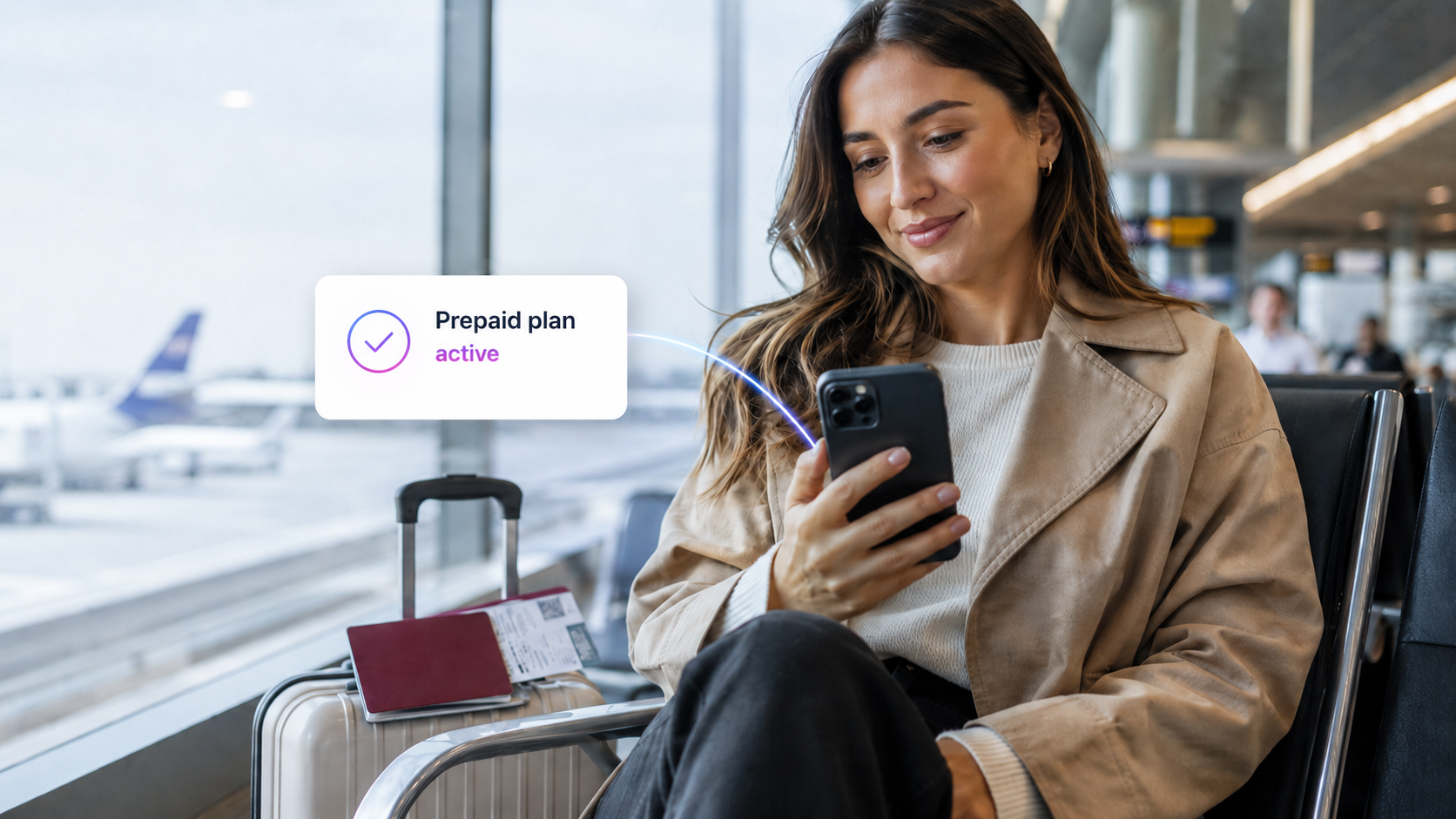
Traveler using a smartphone with a prepaid eSIM plan before using mobile data abroad
Best Prepaid eSIM for Travel: Pay Once, Use Data Abroad
A prepaid eSIM is one of the simplest ways to get mobile data when traveling abroad. Instead of relying on expensive roaming, buying a physical SIM card after arrival, or signing up for a long-term mobile plan, you can choose a data plan before your trip, pay once, install it digitally, and use mobile data while you travel.
For many travelers, the best prepaid eSIM for travel is the plan that gives the right balance of destination coverage, data amount, validity period, price, and ease of setup. It should fit your actual trip, not just look cheap at first glance.
With a travel eSIM, you can prepare your mobile data before departure and stay connected abroad without changing plastic SIM cards. This makes prepaid eSIMs especially useful for tourists, business travelers, digital nomads, students, families, and anyone who wants a more predictable way to use mobile data abroad.
What is a prepaid eSIM?
A prepaid eSIM is a digital mobile data plan that you pay for before using it. Unlike a traditional mobile contract, it does not usually require a long-term subscription, physical SIM card, or local store visit.
The eSIM is installed digitally on your compatible phone. Once installed and activated, it lets your device connect to supported mobile networks in the country, region, or destinations included in the plan.
A prepaid eSIM is useful for travel because it gives you more control. You can choose the destination, data amount, and validity period before your trip starts.
If you are new to eSIM technology, read our guide explaining what a travel eSIM is and how it works before choosing a plan.
Why prepaid eSIMs are useful for travel
Travel often involves situations where mobile data is essential. You may need maps at the airport, transport apps in a new city, hotel booking details, translation tools, messaging apps, payment apps, or email access while moving between destinations.
A prepaid eSIM can help you stay connected without depending only on public Wi-Fi or your home operator’s roaming rates.
A prepaid eSIM is useful because it can help you:
- pay before you travel
- avoid surprise roaming bills
- choose a data plan that fits your trip
- install mobile data digitally
- keep your regular SIM card in your phone
- avoid searching for local SIM cards abroad
- use mobile data shortly after arrival
- manage travel data more easily
For many travelers, the biggest advantage is control. You know what you are buying before you use the data.
How does a prepaid eSIM work?
A prepaid eSIM works by adding a digital data plan to your phone. After you buy the plan, you install it on your compatible device using the provided setup method, often a QR code or in-app installation flow.
The general process is simple:
- Choose your destination or region.
- Select the data amount and validity period.
- Buy the prepaid eSIM plan.
- Install the eSIM on your compatible phone.
- Select the eSIM for mobile data when you are ready to use it.
- Use mobile data abroad in the included destination or destinations.
With duasim, you can browse prepaid eSIM plans by destination and choose a country, regional, or global option that fits your travel route.
Prepaid eSIM vs roaming
A prepaid eSIM and roaming both allow you to use mobile data abroad, but they work differently.
Roaming uses your existing mobile plan from your home operator. When you travel, your phone connects to a foreign network, and your home operator charges you based on its roaming rules.
A prepaid eSIM gives you a separate digital data plan for your destination. You choose the plan before using it, which can make costs easier to understand.
A prepaid eSIM may be better than roaming if you want:
- clearer pricing
- more control over mobile data costs
- a travel-specific data plan
- less risk of unexpected roaming charges
- a simple setup before departure
- regional or global coverage for multi-country trips
Roaming may still make sense if your current mobile plan already includes your destination at no extra cost. Before deciding, compare both options. Our guide to eSIM vs roaming for international travel explains the main differences in more detail.
Prepaid eSIM vs local SIM card
A local SIM card can be useful if you are staying in one country for a long time, but it can be inconvenient for short trips or multi-country travel. You may need to find a mobile shop, compare local plans, show identification, and replace the SIM already in your phone.
A prepaid eSIM is digital, so you can usually buy and install it before you travel. There is no plastic SIM card and no need to open your SIM tray.
A prepaid eSIM is often more convenient if:
- your trip is short
- you want mobile data immediately after arrival
- you are visiting several countries
- you want to keep your regular SIM card in your phone
- you prefer digital setup
- you do not want to visit a local mobile store abroad
For many modern travelers, the convenience of a prepaid eSIM is one of its strongest benefits.
Who should use a prepaid eSIM?
A prepaid eSIM can be useful for many types of travelers.
It is especially useful for:
- tourists who need mobile data abroad
- business travelers who need reliable internet on arrival
- digital nomads working across countries
- students studying abroad
- families on holiday
- backpackers visiting multiple destinations
- road-trippers using maps and booking apps
- travelers who want to avoid roaming charges
- people who want mobile data without a physical SIM card
If you want to pay once, choose your data in advance, and use mobile data abroad with more control, a prepaid eSIM can be a strong choice.
What makes the best prepaid eSIM for travel?
The best prepaid eSIM for travel is not only the cheapest plan. It is the plan that fits your destination, data use, trip length, and device.
Before choosing a plan, look at:
- destination coverage
- data amount
- validity period
- price
- device compatibility
- installation method
- hotspot support if needed
- country, regional, or global coverage
- support information
- activation rules
A good prepaid eSIM should be simple to install, easy to understand, and suitable for the way you travel.
Choose the right destination coverage
The first thing to check is destination coverage. Your prepaid eSIM must include the country or countries you are visiting.
If you are staying in one country, a country-specific plan may be enough. If you are visiting several countries in the same region, a regional plan can be more convenient. If your trip includes several continents or many destinations, a global plan may be a better fit.
For example:
- one-country trip: choose a country eSIM
- several European countries: choose a regional Europe eSIM
- worldwide route: choose a global eSIM
- flexible route: choose broader coverage
If you are traveling across Europe, our guide to the best eSIM for Europe travel explains when one regional plan can be more useful than separate local SIM cards.
Choose the right amount of data
The right amount of data depends on how you use your phone abroad.
Light travelers may only need enough data for maps, messages, email, and basic browsing. Moderate users may need more data for social media, travel apps, photo uploads, and occasional calls. Heavy users may need larger plans for video calls, hotspot, remote work, streaming, or frequent uploads.
As a simple guide:
- 1 GB to 3 GB: short trips and light use
- 3 GB to 10 GB: regular travel use
- 10 GB to 20 GB: longer trips, hotspot, video calls, and frequent app use
- 20 GB or more: remote work, streaming, heavy hotspot, or long stays
Before choosing your plan, read our guide on how much mobile data you need when traveling abroad to estimate your usage more accurately.
Check the validity period
A prepaid eSIM plan usually has a validity period. This means the plan works for a specific number of days after activation or after it first connects to a supported network, depending on the plan rules.
Before buying, check:
- how long the plan lasts
- when the validity period begins
- whether the plan covers your full trip
- whether you need data on arrival and departure days
- whether your trip may be extended
A plan with enough data is not helpful if it expires before your trip ends. Make sure both the data amount and validity period fit your travel dates.
Check if your phone supports eSIM
Before buying a prepaid eSIM, make sure your phone supports eSIM technology. Many newer iPhones, Samsung Galaxy devices, Google Pixel phones, and other modern smartphones support eSIM, but compatibility depends on the exact model, region, carrier lock status, and software version.
You can check if your phone supports eSIM before choosing a plan.
Your phone should also be unlocked. If your phone is locked to one mobile operator, it may not accept another eSIM plan for travel.
For more detail, read our guide to eSIM compatible phones before buying a prepaid eSIM.
Install your prepaid eSIM before departure
It is usually best to install your prepaid eSIM before you travel, while you still have stable Wi-Fi. This gives you time to complete the setup and check your phone settings before your trip begins.
A good setup process is:
- Choose your prepaid eSIM plan.
- Check that your phone supports eSIM.
- Install the eSIM while connected to Wi-Fi.
- Label the eSIM clearly, such as “Travel” or “duasim”.
- Keep your regular SIM active if you want your normal number.
- Select the eSIM for mobile data when you are ready to use it.
- Enable data roaming for the eSIM line if required by the plan.
If you are using an iPhone, read our guide on how to install an eSIM on iPhone before you travel. If you use Android, read our guide on how to activate an eSIM on Android.
Keep your regular SIM card in your phone
One advantage of using a prepaid eSIM is that you can often keep your regular SIM card in your phone. Many modern smartphones support dual SIM functionality, allowing you to keep your normal number active while using the eSIM for mobile data abroad.
This can be useful if you need to receive calls, SMS, or bank verification messages on your regular number.
The important part is to control your mobile data settings. Make sure your prepaid eSIM is selected for mobile data and your primary SIM is not using expensive roaming data by mistake.
Avoid roaming charges with a prepaid eSIM
A prepaid eSIM can help you avoid roaming charges because it gives you a separate data plan for your trip. Instead of using mobile data through your home operator abroad, you use the travel eSIM for mobile data.
To avoid roaming charges:
- turn off data roaming on your primary SIM
- select your travel eSIM for mobile data
- disable automatic data switching if needed
- monitor your data usage
- use Wi-Fi for large downloads and backups
- enable data roaming only on the eSIM line if required
For a full checklist, read our guide on how to avoid roaming charges when traveling abroad.
Country, regional, or global prepaid eSIM?
The best prepaid eSIM depends on your route.
A country prepaid eSIM is usually best if you are visiting one country.
A regional prepaid eSIM is usually better if you are traveling through several countries in one region, such as Europe, Asia, or the Balkans.
A global prepaid eSIM may be best if your trip includes multiple regions or continents.
If you travel often or have a complex route, a global plan can reduce the need to buy separate plans for every destination. Our guide to global eSIM plans for worldwide travel explains when a worldwide data plan may be useful.
Best prepaid eSIM for short trips
For short trips, the best prepaid eSIM is usually a simple plan with enough data for essential use. You may only need mobile data for maps, messages, bookings, transport apps, browsing, and occasional social media.
A smaller data plan can work well if you are traveling for a weekend or a few days and using Wi-Fi for heavier activities.
Before choosing, check that the plan covers your destination and has a validity period that matches your travel dates.
Best prepaid eSIM for longer trips
For longer trips, choose a prepaid eSIM with more data and a validity period that covers your full stay.
If you are traveling for one or two weeks, using your phone daily, uploading content, or depending on mobile data for navigation, a larger data plan may be more comfortable.
Longer trips can also involve more unexpected data use. You may need maps more often, use apps throughout the day, make video calls, or share hotspot. Choosing enough data in advance can make the trip smoother.
Best prepaid eSIM for multi-country travel
For multi-country travel, a regional or global prepaid eSIM is often the most practical choice. Instead of buying a new local SIM card in each country, you can use one plan across supported destinations.
This is useful for:
- Europe train trips
- Balkan road trips
- backpacking routes
- cruises with several stops
- business travel across multiple cities
- digital nomad travel
- international family visits
Before buying, make sure every country on your route is included in the plan.
Best prepaid eSIM for business travel
Business travelers often need reliable mobile data immediately after arrival. Email, calendars, document access, maps, ride-hailing apps, messaging, and video calls can all be important.
For business travel, the best prepaid eSIM should offer enough data for work use, a validity period that covers the full trip, and coverage in all destinations.
If you use hotspot, join video meetings, or upload files, choose more data than a light tourist would need.
Best prepaid eSIM for digital nomads
Digital nomads often need more flexible mobile data than regular travelers. If you work while traveling, you may need larger data plans, hotspot support, regional or global coverage, and backup internet when Wi-Fi is unreliable.
A prepaid eSIM can be useful because it allows you to choose data based on your current route without committing to a long-term local contract.
For digital nomads, the best prepaid eSIM is usually one that balances coverage, data amount, validity, and flexibility.
How to make your prepaid eSIM data last longer
Even with a prepaid plan, it is smart to manage your data use.
To make your data last longer:
- download maps offline before departure
- use Wi-Fi for app updates and large downloads
- turn off cloud backups over mobile data
- reduce video streaming quality
- disable autoplay videos on social media
- limit hotspot sharing
- turn off background app refresh
- monitor data usage in phone settings
These habits can help you get more value from your prepaid eSIM data plan.
Common mistakes when choosing a prepaid eSIM
Avoid these common mistakes before buying:
- choosing a plan that does not cover every destination
- buying too little data for your travel style
- ignoring the validity period
- not checking phone compatibility
- assuming hotspot is always included
- installing the eSIM too late
- selecting the wrong SIM for mobile data
- leaving roaming active on your primary SIM
- relying only on public Wi-Fi
A few minutes of preparation can prevent most prepaid eSIM problems.
Why choose duasim for a prepaid travel eSIM?
duasim is designed for travelers who want a simple way to use mobile data abroad without changing physical SIM cards or depending on traditional roaming. You can choose a prepaid eSIM plan before your trip, install it digitally, and stay connected while traveling.
With duasim, you can:
- browse prepaid eSIM plans for destinations worldwide
- choose country, regional, or global coverage
- install your eSIM digitally
- keep your regular SIM card in your phone
- use mobile data abroad without changing plastic SIM cards
- manage your travel connectivity more easily
For easier access on your phone, you can also download the duasim app and manage your eSIMs while traveling.
Conclusion: the best prepaid eSIM gives you control before you travel
The best prepaid eSIM for travel is the one that fits your trip before it starts. It should cover your destination, include enough data, last for your full travel period, work on your device, and give you a simple way to stay connected abroad.
A prepaid eSIM can be a strong alternative to roaming because you pay before you use it and know what data plan you are choosing. It can also be more convenient than a local SIM card because it is installed digitally and lets you keep your regular SIM card in your phone.
Before your next trip, check that your phone supports eSIM, estimate your data needs, and choose a prepaid plan that matches your route. With duasim, you can find a prepaid eSIM plan for your next destination and travel with more control over your mobile data abroad.
FAQ: Prepaid eSIMs for travel
What is a prepaid eSIM?
A prepaid eSIM is a digital mobile data plan that you pay for before using it. It is installed on an eSIM-compatible device and can give you mobile data in your chosen destination.
Is a prepaid eSIM good for travel?
Yes. A prepaid eSIM can be very useful for travel because it gives you mobile data abroad without a physical SIM card, long-term contract, or traditional roaming.
Is a prepaid eSIM better than roaming?
A prepaid eSIM can be better than roaming if you want clearer pricing, more control, and a dedicated data plan for your destination. Roaming may still be suitable if your current mobile plan already includes your destination.
How much data should I choose for a prepaid eSIM?
Light travelers may need 1 GB to 3 GB, moderate users may need 3 GB to 10 GB, and heavy users may need 10 GB to 20 GB or more. Your data needs depend on trip length, apps, hotspot, video calls, and streaming.
Can I use a prepaid eSIM in multiple countries?
Yes, if you choose a regional or global prepaid eSIM that includes the countries you are visiting. Always check the included destinations before buying.
Do I need an unlocked phone for a prepaid eSIM?
Usually, yes. Your phone should be eSIM compatible and unlocked to use a prepaid travel eSIM from another provider.
When should I install my prepaid eSIM?
It is usually best to install your prepaid eSIM before departure while you have stable Wi-Fi. Then you can select it for mobile data when you are ready to use it abroad.
Where can I buy a prepaid eSIM for travel?
You can browse duasim prepaid eSIM plans and choose a country, regional, or global plan for your trip.